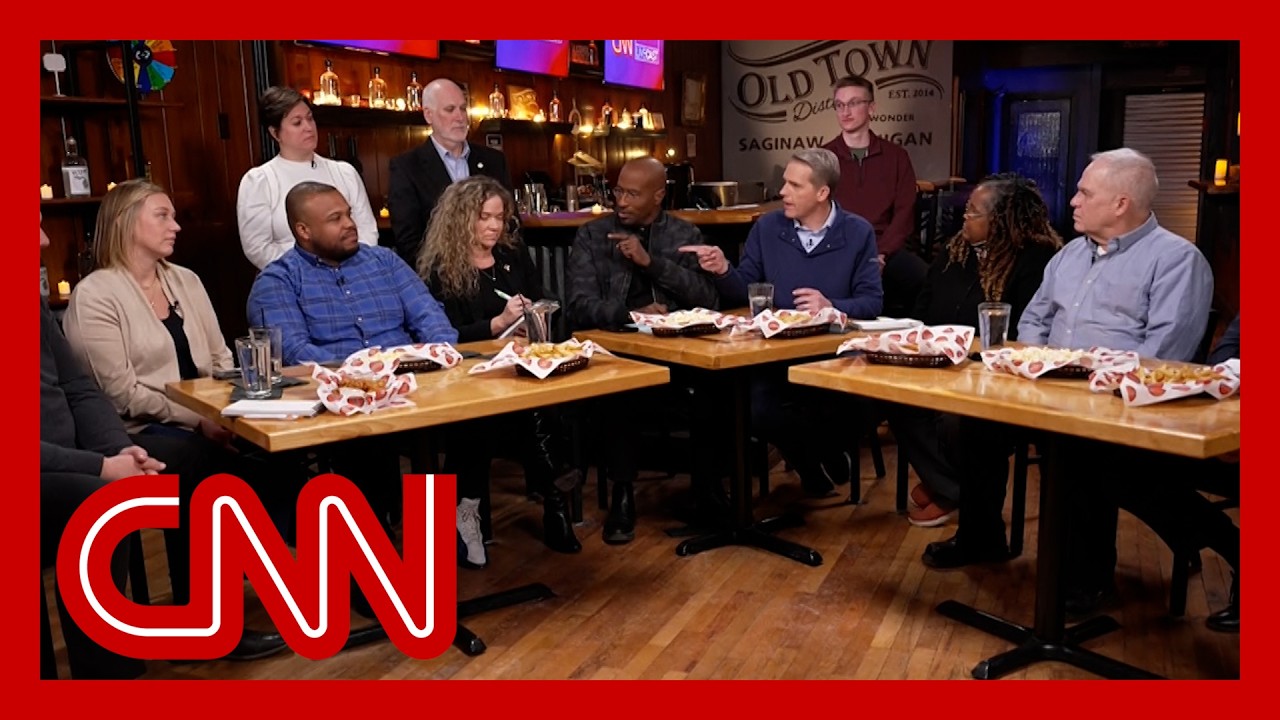
In the heart of Saginaw, Michigan, CNN senior political contributors Van Jones and Scott Jennings engaged with local voters during a live broadcast, capturing a vital moment in American electoral sentiment. Saginaw has recently mirrored a pivotal political shift, flipping from democratically leaning to a Republican stronghold, making it a microcosm of the national political landscape as key midterm contests approach.
As the Presidential address unfolded, the room buzzed with a blend of hope and frustration. Van Jones observed, “Half of us were miserable. The other half were delighted,” summarizing the stark divisions present. The reactions mirrored not only individual party loyalties but also deep socioeconomic concerns.
One attendee, a self-identified Democrat, expressed disappointment, saying, “He did not talk about what he was doing to make our lives better.” This sentiment was echoed by James Carville, who reiterated the primacy of the economy in voters’ minds. As inflation and rising costs dominate discussions at kitchen tables across America, the absence of a robust economic plan in the President’s speech left many feeling neglected.
In contrast, Trump supporters in the room found reasons for optimism. Erica, a Trump follower, praised the speech for addressing tax breaks, particularly emphasizing the potential impact of childcare tax credits on her family. “It’s a huge change,” she noted, reflecting a community still grappling with the lack of immediate financial relief. Yet, when economic policies such as tariffs were criticized, even some supporters showed concern, recognizing that increased costs threaten their ability to provide for their workers.
Healthcare emerged as another critical topic among the attendees. Attendees questioned the President’s commitment to healthcare reform, with frustrations mounting over rising insurance premiums. One voter articulated anxiety over escalating healthcare costs, seeking clarity on the administration’s direction. Despite the presentation of strategies, many felt that tangible progress was lacking.
The most theatrical moment of the address, when Trump urged Congress members to demonstrate their commitment to American citizens over illegal aliens, sparked a mixed response. Some viewed it as a spectacle designed to elicit applause and highlight divisions. “It seemed like a cheap stunt,” one attendee remarked, reflecting a broader concern regarding political gamesmanship overshadowing genuine issues. The symbolism of such moments, while resonating with partisan fans, often alienates voters seeking substantive discussion.
The debate around the effectiveness of Trump’s rhetoric highlighted a critical disconnect. While the President’s applause lines may have energized Republican supporters, many in the audience were wary of his overarching narrative, questioning whether it genuinely addressed their day-to-day struggles. “They knew their statements were a dirty, rotten lie,” remarked one participant, underscoring the skepticism that pervaded the discourse.
As the evening progressed, the conversation veered into lighter territory, touching on the pride in American achievements in hockey and cultural exchanges with Canada. Yet, this momentary levity did not overshadow the urgency with which voters approached economic concerns. Voters demanded action, frustrated that political dialogue often sidestepped the pressing realities they face, from healthcare to job security to affordability.
In the backdrop of Saginaw, as these voters engaged with the political narratives shaping their lives, they repeatedly emphasized a need for policymakers to reconnect with the electorate. The broader national implications of this gathering are profound. With midterm elections looming, candidates must recalibrate their messages to resonate with constituents who feel overlooked amid the rhetorical flourish of political debates.
Ultimately, the dialogue overseen by Van Jones and Scott Jennings underlines a crucial truth: voters are looking for solutions, not spectacles. As the economy remains a central concern, the challenge for political leaders is clear: to transition from promises to performance, ensuring that the voices of everyday Americans are not just acknowledged but actively addressed in the spheres of policy and governance.